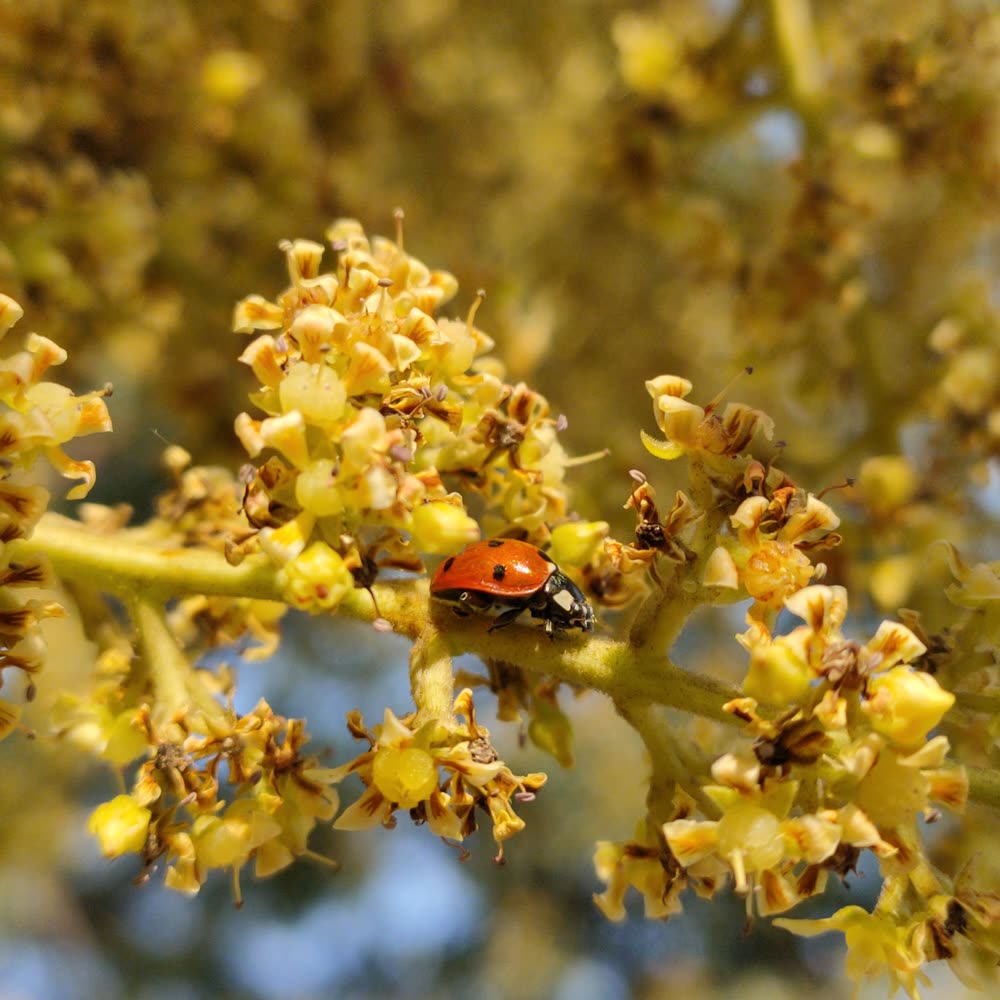
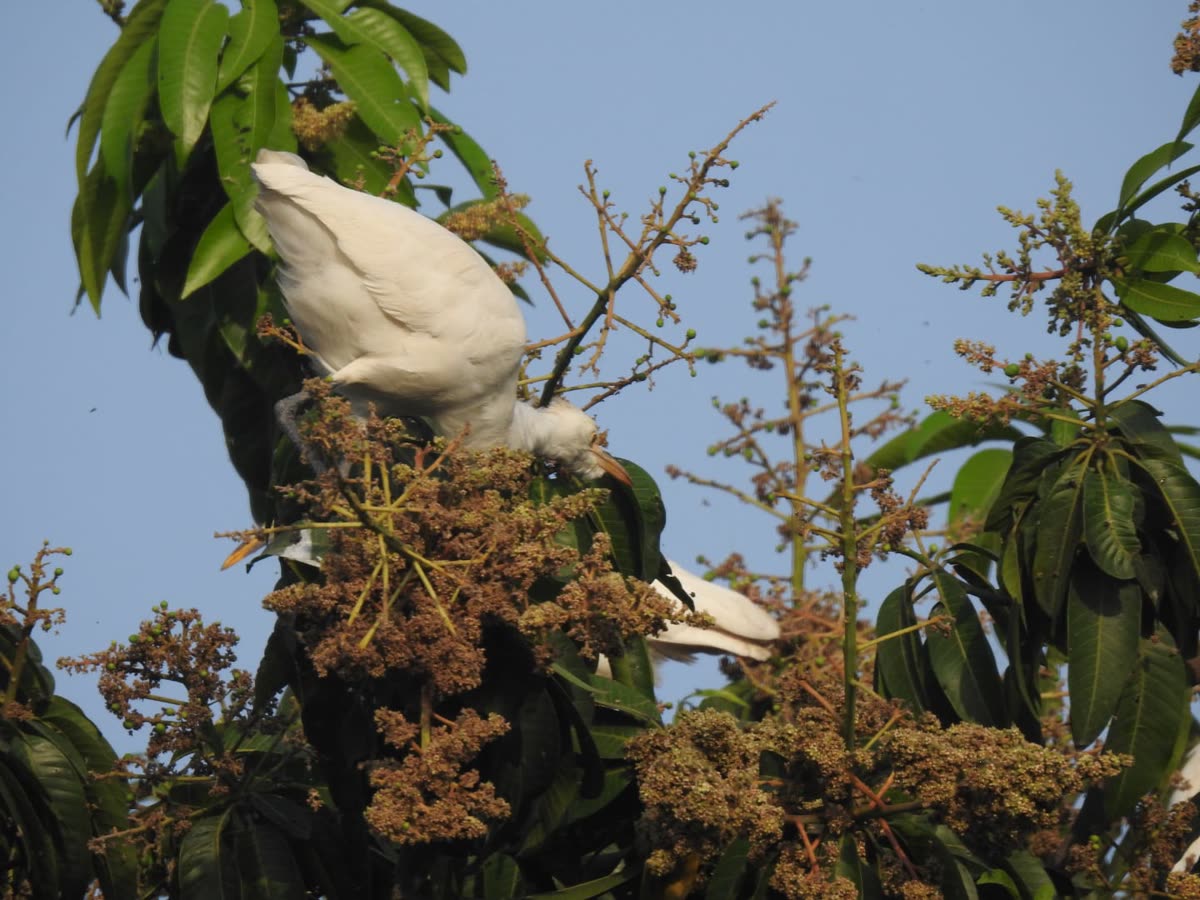
आम के फूलों पर कीट, और उन पर निर्भर मवेशी बगुले
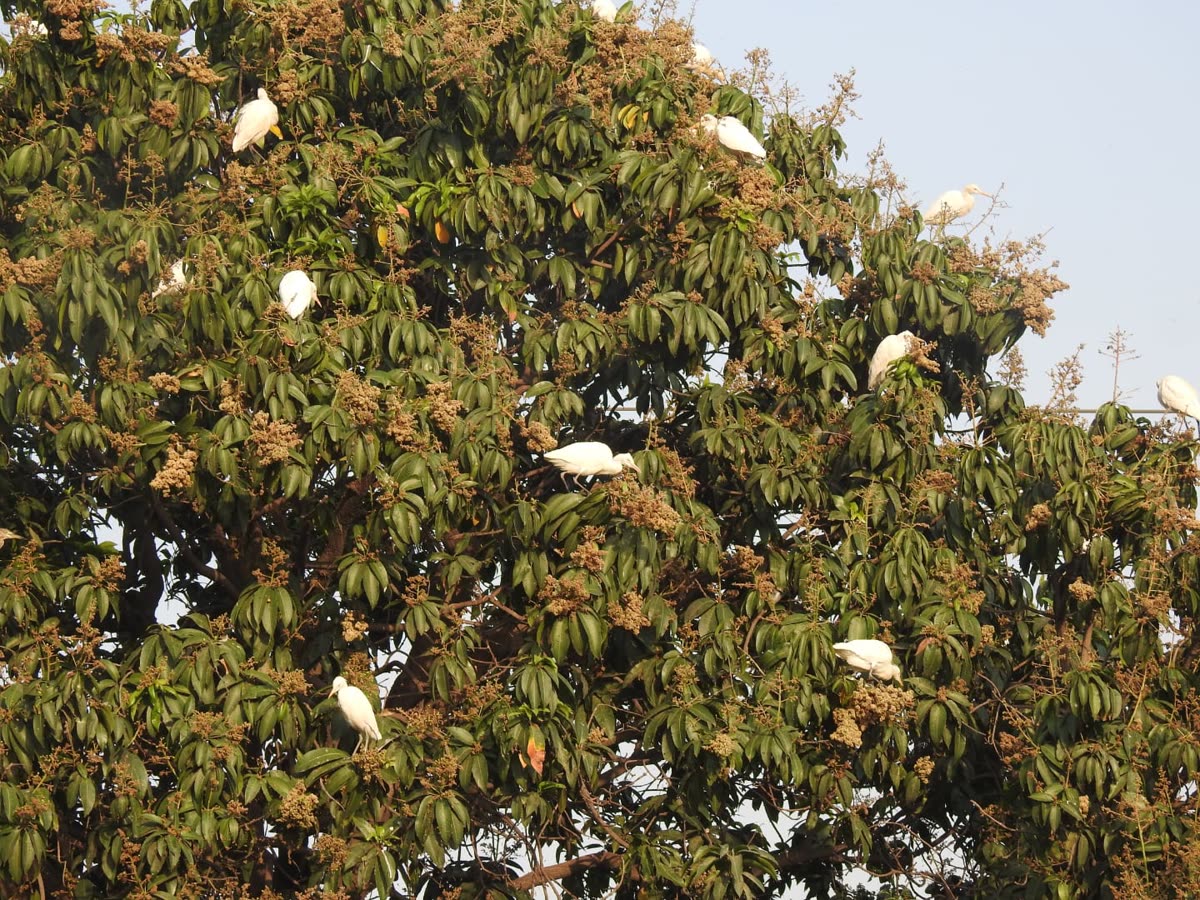
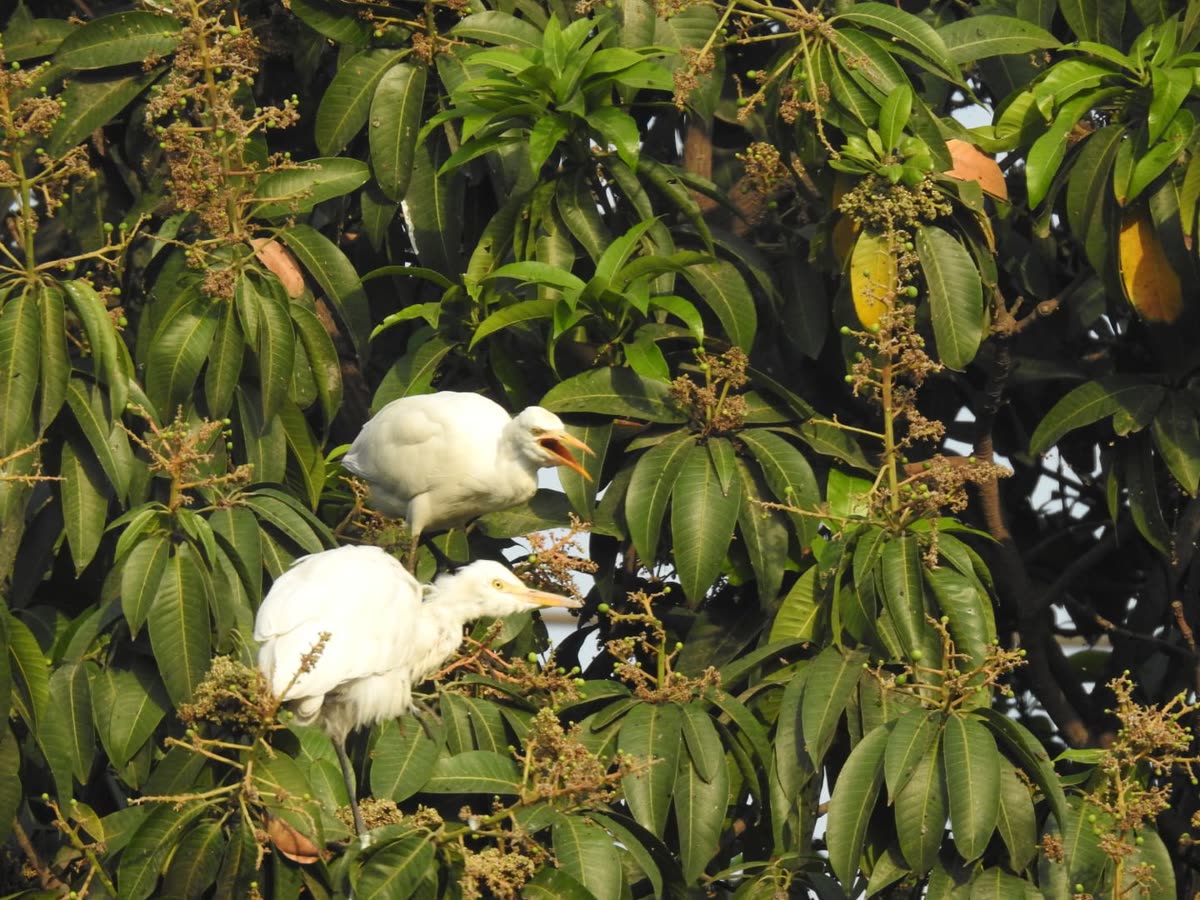
मवेशी बगुला (Bubulcus ibis) सामान्यतः खेतों, चरागाहों और पशुओं के साथ भोजन खोजते हुए देखा जाता है। इस अध्ययन में कोटा जिले के चार स्थानों पर एक अलग व्यवहार दर्ज किया गया: बगुले आम (Mangifera indica) के फूलों वाली कैनोपी में बैठकर फूलों पर आने वाले कीटों को खाते देखे गए।
फरवरी के अंतिम भाग से अप्रैल 2024 के मध्य तक सुबह और शाम के समय प्रत्यक्ष अवलोकन किए गए। सी. वी. गार्डन और गिरधरपुरा में अधिक आम के पेड़ और अधिक पुष्पगुच्छ होने के कारण बगुलों की गतिविधि अधिक दिखाई दी, जबकि कुनहाड़ी और गांधिफली में यह गतिविधि कम या अवसरवादी रूप में देखी गई।
प्रस्तावना और प्रजाति संदर्भ
पेपर में बताया गया है कि बड़े पक्षियों जैसे चील, कौआ, बगुला, जांघिल, चमचा, जलकाग और धनेश को पेड़ों पर बैठा देखना सामान्य अनुभव है। भारत में बगुलों की छह प्रजातियाँ पाई जाती हैं, जिनमें सबसे अधिक दिखने वाला सामान्य बगुला मवेशी बगुला है। संस्कृत में इसे “बकः” और हिंदी में “बगुला” कहा जाता है। प्रजनन मौसम में इसके सफेद शरीर पर हल्का बादामी रंग दिखाई देता है।
मवेशी बगुले अक्सर पशुओं, खेतों और ट्रैक्टरों के आसपास कीट पकड़ते देखे जाते हैं। यही कारण है कि इस वृक्षीय भोजन व्यवहार का महत्व बढ़ जाता है: यहाँ पक्षी जमीन पर पशुओं के साथ नहीं, बल्कि आम के फूलों वाली ऊँची कैनोपी में भोजन कर रहे थे।
आम के फूल और कीट
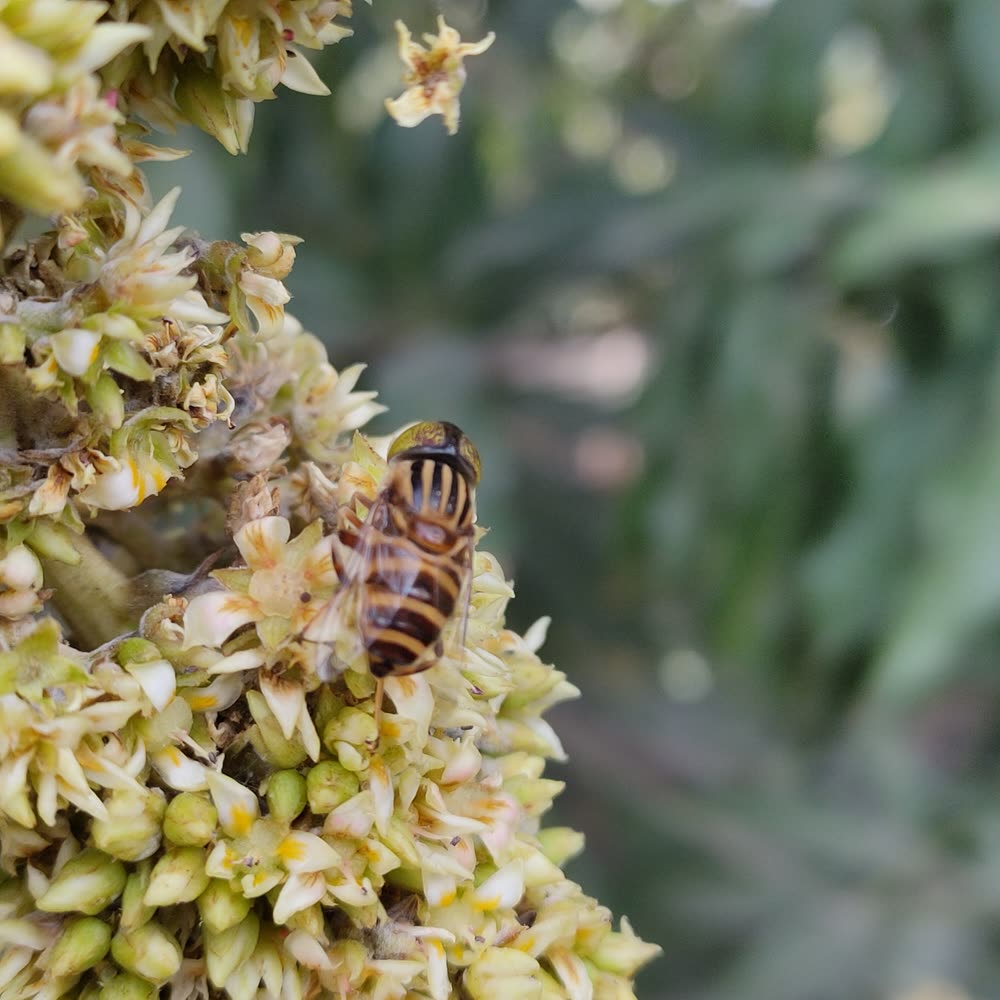
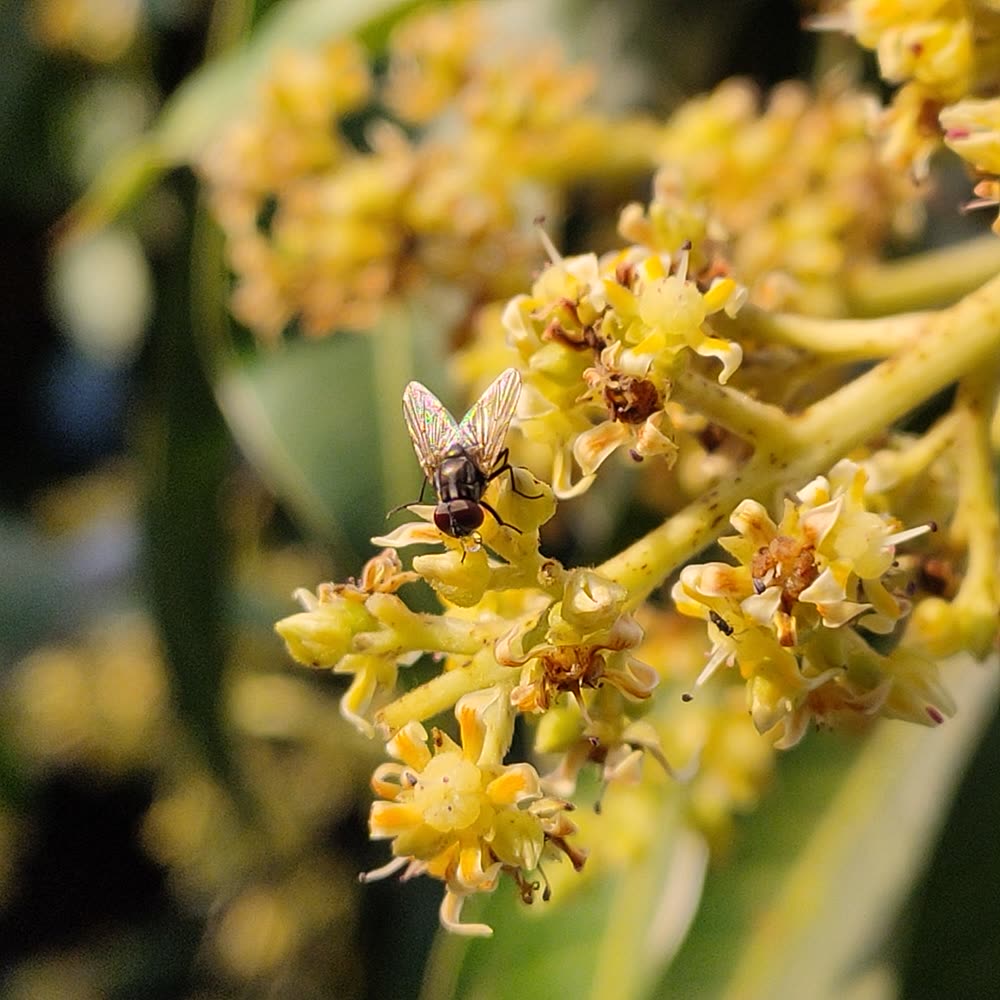
आम का पेड़ दक्षिण एशिया का महत्वपूर्ण सदाबहार वृक्ष है। फरवरी से अप्रैल के बीच आम में फूल आते हैं। स्थानीय भाषा में फूलों के गुच्छों को “बौर” या “मौर” कहा जाता है। फूलों के पूर्ण विकास पर पूरा वृक्ष पीले रंग का दिखाई देने लगता है। इन पुष्पगुच्छों पर अनेक छोटे कीट आते हैं, जो परागण में भी भूमिका निभाते हैं।
विधि और अवलोकन
अध्ययन लाड़पुरा तहसील, कोटा जिला, राजस्थान में किया गया। प्रत्यक्ष मानव-आधारित नियमित अवलोकन विधि अपनाई गई। बगुलों को सुबह 6:30 से 10:00 बजे और शाम 4:00 से 6:00 बजे तक देखा गया। Nikon P900 कैमरा और 48MP Realme स्मार्टफोन से फोटोग्राफ लिए गए।
मुख्य अवलोकन
आम के फूलों पर Diptera, Hymenoptera, Coleoptera और Lepidoptera समूहों के कीट आते हैं। यही कीट मवेशी बगुलों के लिए भोजन संसाधन बने। कई पक्षी फूलों के गुच्छों के पास लगभग स्थिर रहकर कीट पकड़ते देखे गए; कभी-कभी वे शाखाओं और फूलों के बीच सक्रिय होकर भी भोजन खोजते थे।
यह व्यवहार दिखाता है कि शहरी और ग्रामीण बगीचों में पुराने या अधिक फूल देने वाले आम के पेड़ केवल फलदार वृक्ष नहीं हैं; वे परागण कीटों, कीटभक्षी पक्षियों और स्थानीय खाद्य-जाल के लिए मौसमी सूक्ष्म-आवास भी हैं।
सावधानी से पढ़ने योग्य निष्कर्ष
अध्ययन यह संकेत देता है कि बसंत में फूल देने वाले वृक्ष, विशेषकर आम, शहरी जैव विविधता में महत्वपूर्ण भूमिका निभा सकते हैं। बगुले कुछ हद तक कीट नियंत्रण में भी योगदान दे सकते हैं, लेकिन इस संबंध को दीर्घकालिक निगरानी और अधिक स्थानों पर दोहराए गए अवलोकनों से और मजबूत करना होगा।
पेपर के अनुसार वृक्षीय भोजन व्यवहार संभवतः तब अधिक दिखाई देता है जब खेतों में कीट कम हो जाते हैं, फूलदार वृक्षों पर कीट अधिक सघन होते हैं, या मधुमक्खियों और अन्य मक्खियों के झुंड ऊँचाई पर गुजरते हैं। इस अध्ययन ने बसंत ऋतु में शहरी व ग्रामीण आम-आधारित सूक्ष्म-आवासों की उपयोगिता को सामने रखा।
Arboreal Foraging Behavior by Cattle Egrets on Mango Trees
Lightly web-formatted from the original paper so the research structure, observations, tables, and references remain intact.
Abstract
The cattle egret (Bubulcus ibis) is a cosmopolitan bird species of egret found in the tropics, subtropics, and warm temperate zones. Cattle egrets are active foragers commonly seen chasing insects stirred by cattle or running to catch insects during ploughing and irrigation of farms.
Arboreal foraging by cattle egrets has been reported only occasionally. The authors observed cattle egrets feeding on insects in mango trees (Mangifera indica L.) at four places in Kota district, Rajasthan: C. V. Garden, Kunhadi area, Girdharpura, and Gandhifali village. Two of these places had more mango trees, leading to more observations of cattle egret flocks from late February 2024 to mid-April 2024. Cattle egrets were observed at all four locations feeding in the canopy of mango trees on swarms of pollinating insects attracted to flowers. Foraging egrets were scattered throughout the canopy; most remained stationary beside flower clusters to catch insects, although more active behaviors were also observed.
Keywords: Bubulcus ibis, foraging behavior, Mangifera indica, pollinators, urban biodiversity, Kota.
Received: 24 July 2024. Accepted: 04 October 2024. Published: 04 October 2024.
Suggested citation: Kumar S and Leeladhar, 2024. Arboreal foraging behavior by cattle egrets on mango trees in Kota district, Rajasthan, Prithivya, An Official Newsletter of WCB Research Foundation and WCB Research Lab. Vol 4(2), 29-36.
Introduction
Birds sitting on trees often attract attention, especially large birds such as eagles, crows, herons, egrets, ibis, spoonbills, storks, cormorants, and hornbills. Among these, egrets are commonly seen outside rural and urban areas. The cattle egret belongs to the family Ardeidae and is found in tropical, subtropical, and warm temperate zones. In India, six egret species occur, and the most visible “common egret” in this context is the cattle egret. It is called “Bakah” in Sanskrit and “Bagula” in Hindi.
Cattle egrets are usually seen in agricultural fields, barns, and pastures with cattle, which is why they are named cattle egrets. They nest in colonies, usually near water bodies and often with other wading birds. The nest is a platform of sticks in trees or shrubs. Cattle egrets exploit drier and open habitats more than other egret species and are often associated with cattle, pigs, goats, horses, and moving vehicles such as tractors.
Mango is commonly grown in tropical climates and is native to South Asia. The scientific name of mango is Mangifera indica L., in the family Anacardiaceae. Mango is an evergreen tree with grey-brown bark, long lanceolate leaves, large many-flowered panicles, and juicy drupe fruits. Flowering generally occurs from February to mid-April. The clusters of flowers are called “baura” or “maura” locally. Most flowers in these clusters are male, while the rest are bisexual; fruits form from fertilized bisexual flowers.
Materials and Methods
The study was conducted in Ladpura tehsil, Kota district, Rajasthan (N 25° 10' 46.2072", E 75° 50' 19.932"). The method used was direct human-based regular observation. Observers followed cattle egrets from 6:30 am to 10:00 am and from 4:00 pm to 6:00 pm. Feeding was watched directly, and photographs were captured using a Nikon P900 camera and a Realme smartphone camera (48 MP). The survey covered the period from late February to mid-April 2024.
Result and Discussion
Mango trees carry innumerable flower clusters with yellow and orange stripes that attract insects. Insects are important pollinators of flowering plants and are effective cross-pollinators for many crops. Mango flowers are usually pollinated by members of Diptera, Coleoptera, Lepidoptera, Hymenoptera, and Hemiptera. Fruit flies, house flies, small bees, and ladybugs spend considerable time visiting flowers and are classified as main pollinators of mango trees in the paper.
The study observed more pollinators and cattle egrets on mango trees in C. V. Garden and Girdharpura compared with Gandi Phali and the Kunhadi area. C. V. Garden had around 15 to 20 old mango trees more than 20 m tall. Some damaged trees showed fewer flower clusters, and fewer cattle egrets were seen on them. Girdharpura had a mango farm with more than 30 cultivated trees, approximately 10 m to 12 m tall, with broader canopies and more flower clusters.
More cattle egrets were seen stationary beside flower clusters in Girdharpura, catching and eating insects. Fewer egrets were seen in C. V. Garden, likely due to morning anthropogenic activities and development work. In Girdharpura, lower disturbance, rural/agricultural surroundings, and nearby water may have supported more canopy use. At the other two locations, cattle egrets were seen feeding on three mango trees in Gandi Phali village and occasionally on seven roadside mango trees in Kunhadi.
Conclusion
Foraging and breeding are driving forces that determine how egret species locate and consume preferred food and where they place their nests. This study highlights the foraging behavior of cattle egrets on mango trees. Although mango trees are both self-pollinated and cross-pollinated, cross-pollination is more observed, mostly due to insect species. By eating these insects, egrets also act as biological pest control to some extent.
The authors suggest that arboreal foraging by cattle egrets may occur when crop ripening in nearby agricultural lands reduces insect populations, when insects are concentrated on flowering trees, and when swarms of honey bees and other flies pass at altitude. The results show that cattle egrets were found in larger numbers mostly with flower clusters of mango trees. They are diurnal and omnivorous, feeding mostly on insects of the order Diptera in this arboreal-foraging context, while also feeding on Hymenoptera. The study observed comparatively higher numbers during spring in urban areas because food sources were available in sufficient quantity.
Mango-flower insects and cattle egret diet
Table A. Pollinators visiting mango flowers
| Order | Family | Common insect group |
|---|---|---|
| Diptera | Calliphoridae | Blow flies |
| Diptera | Muscidae | House flies |
| Diptera | Syrphidae | Hoverflies |
| Diptera | Sarcophagidae | Flesh fly |
| Hymenoptera | Apidae | Bees |
| Hymenoptera | Formicidae | Ants |
| Coleoptera | Coccinellidae | Ladybugs |
Table B. Insects consumed by cattle egret in mango tree
| Kingdom | Class | Order / family | Common insects |
|---|---|---|---|
| Animalia | Insecta | Diptera | Flies |
| Animalia | Insecta | Hymenoptera | Bees and ants |
| Animalia | Insecta | Lepidoptera | Butterflies and moth caterpillar |