घास के बीज और मुनिया पक्षियों का भोजन व्यवहार
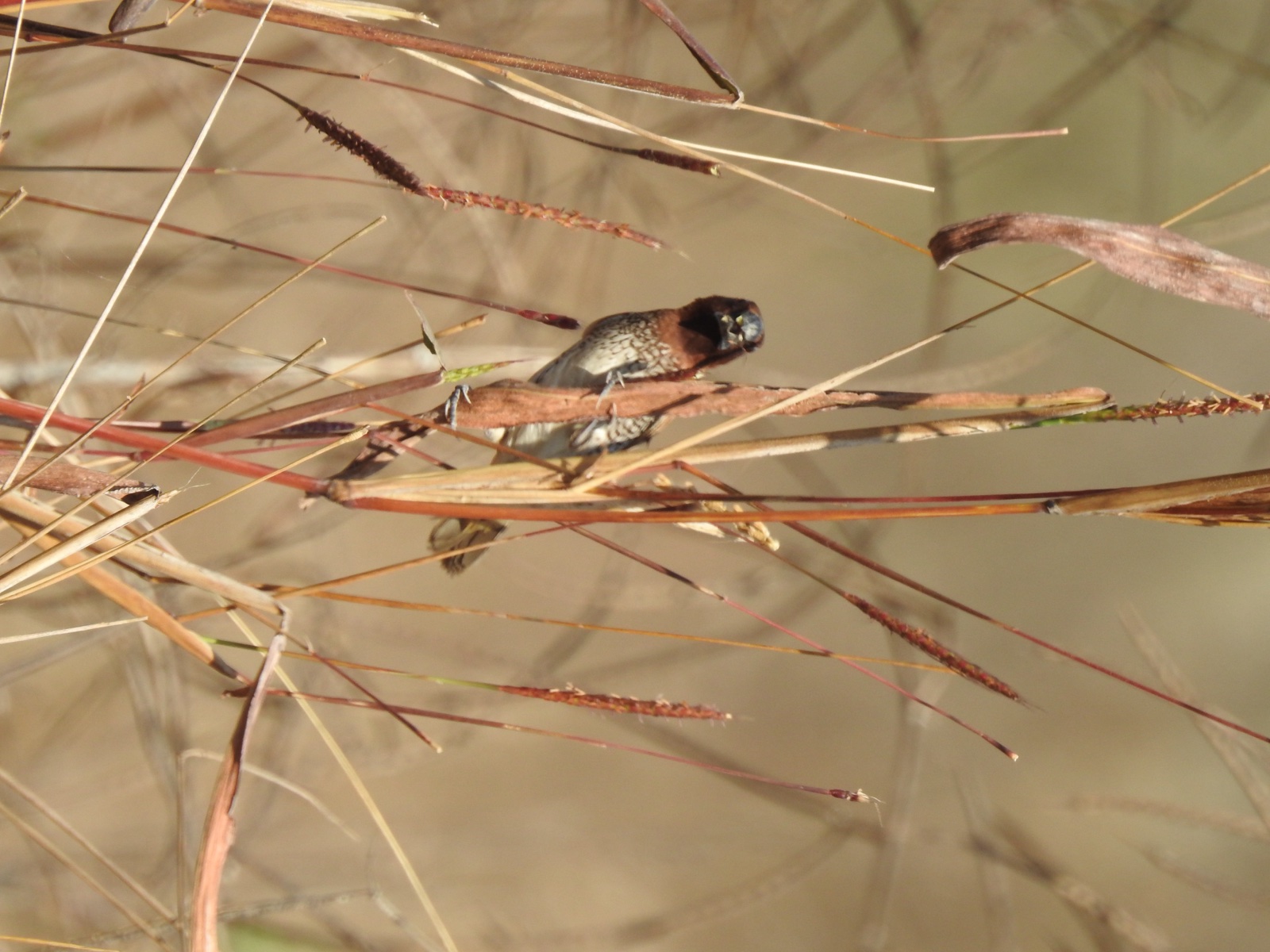
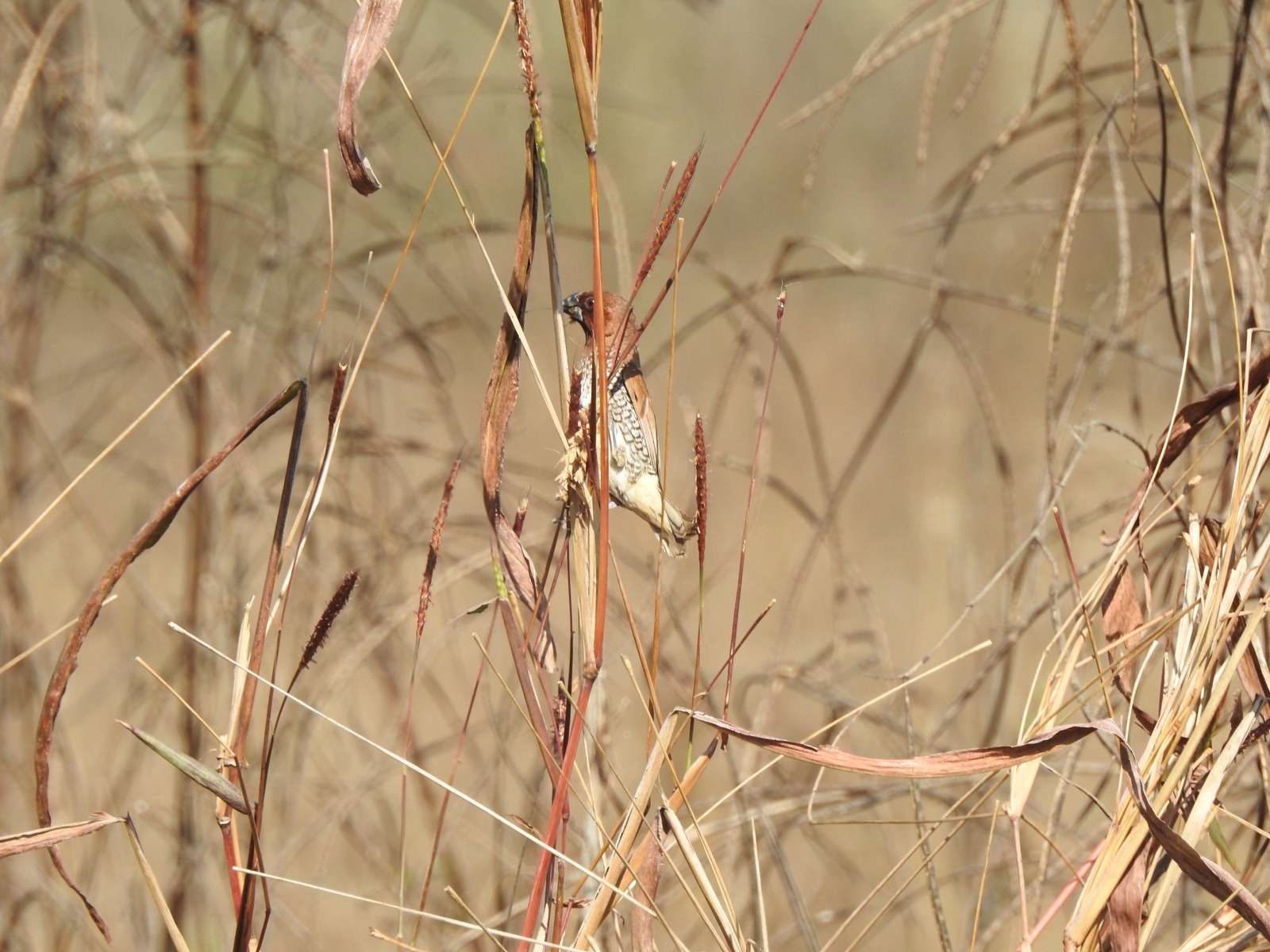
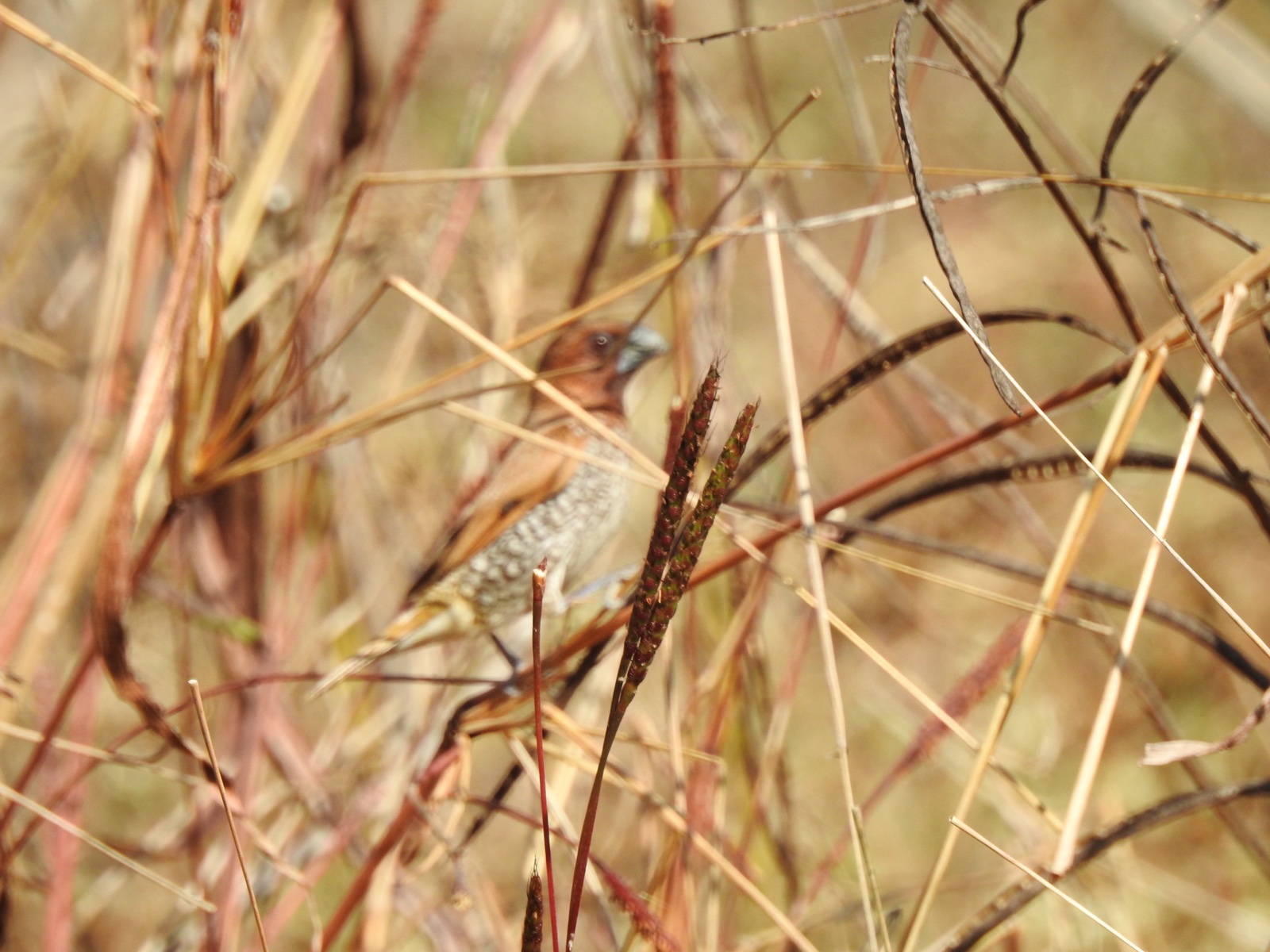
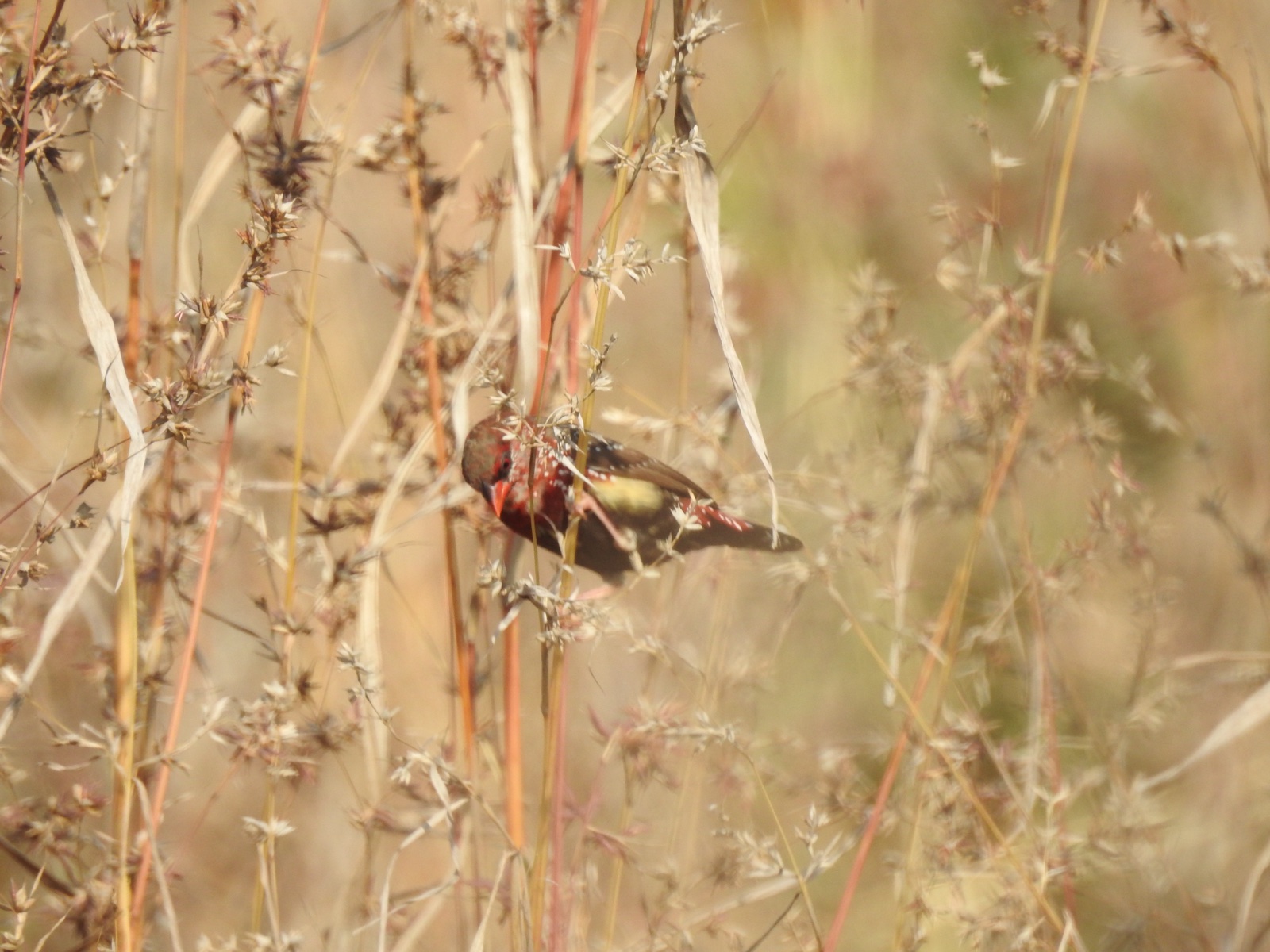
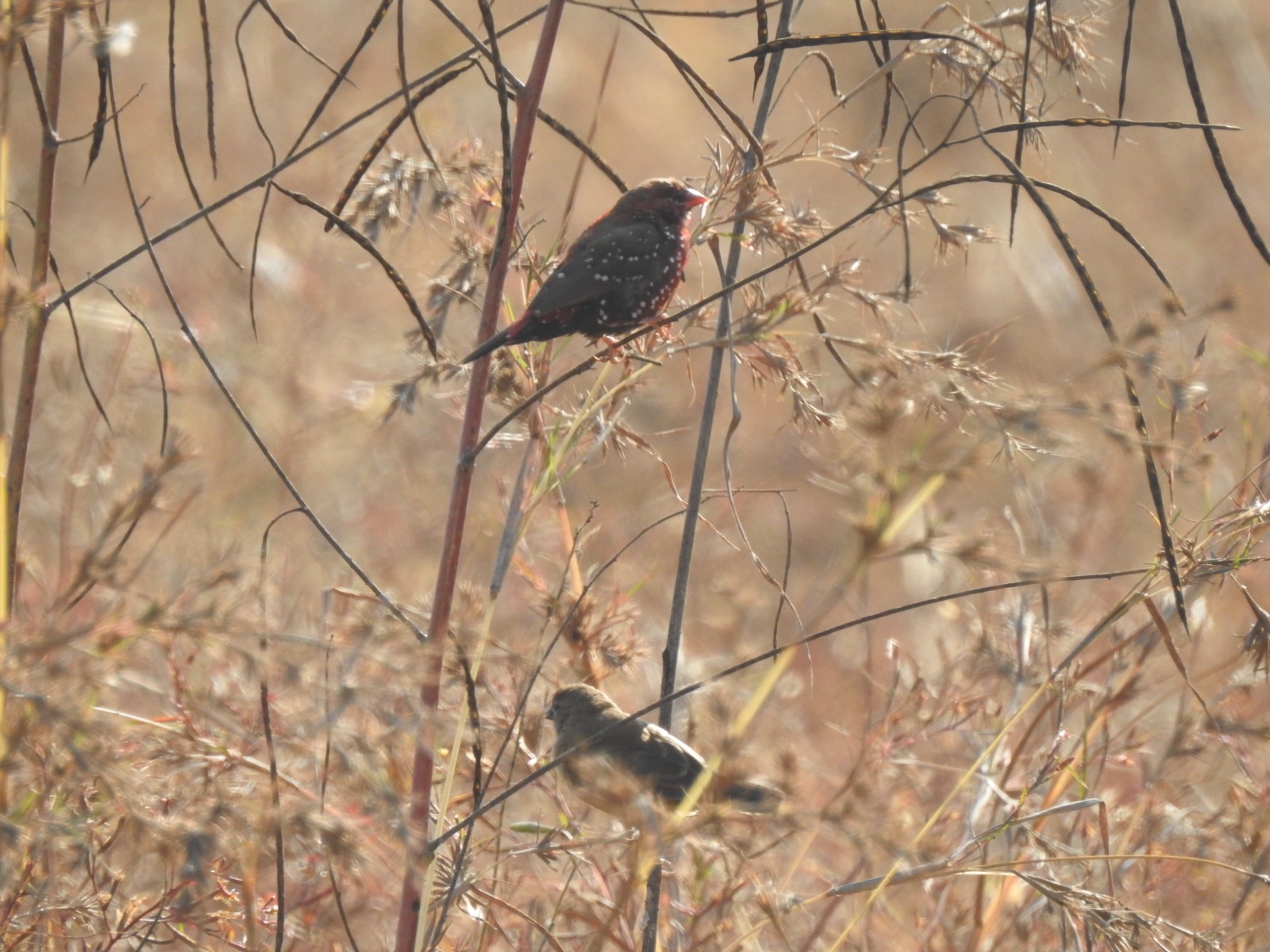
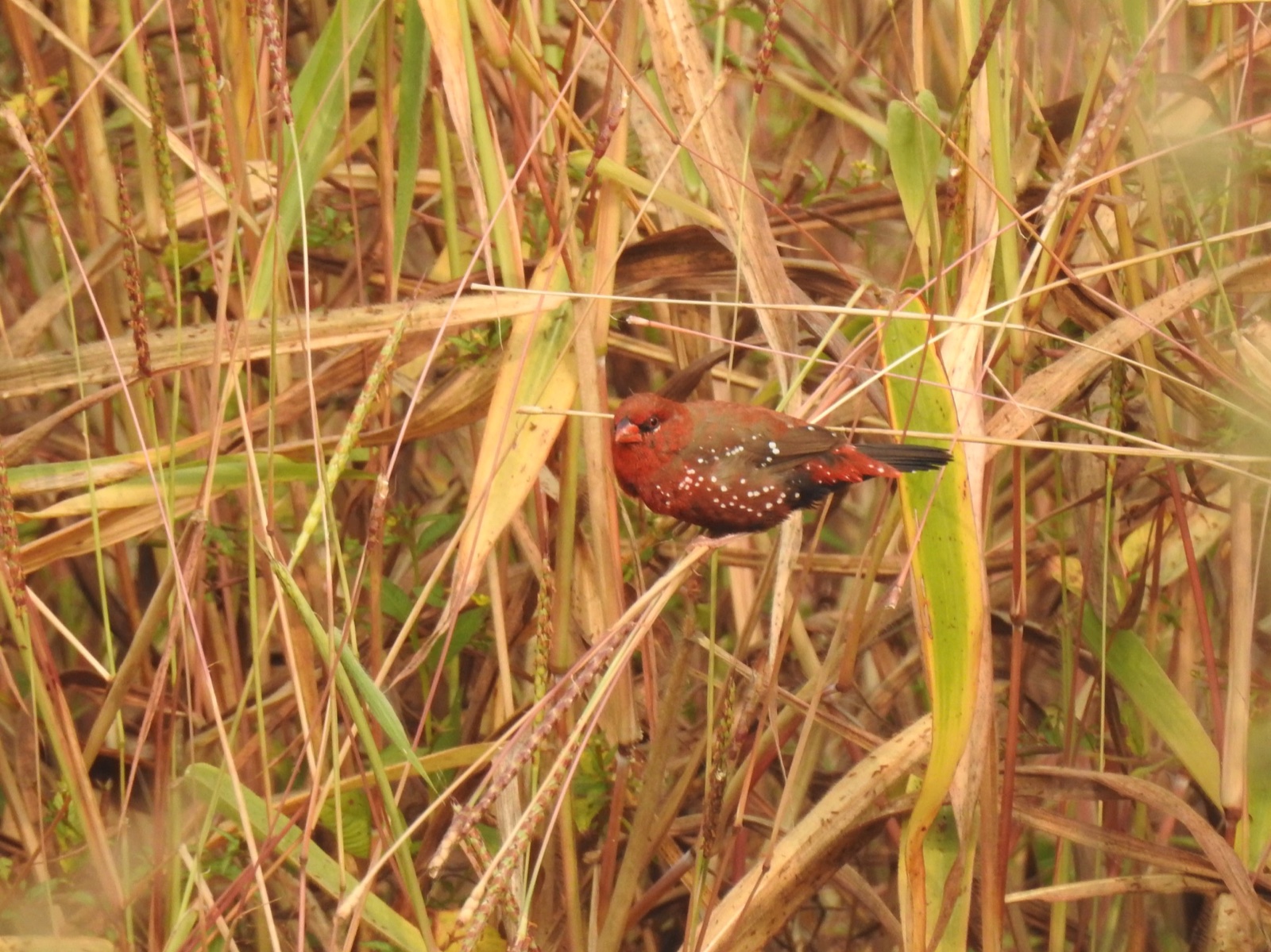
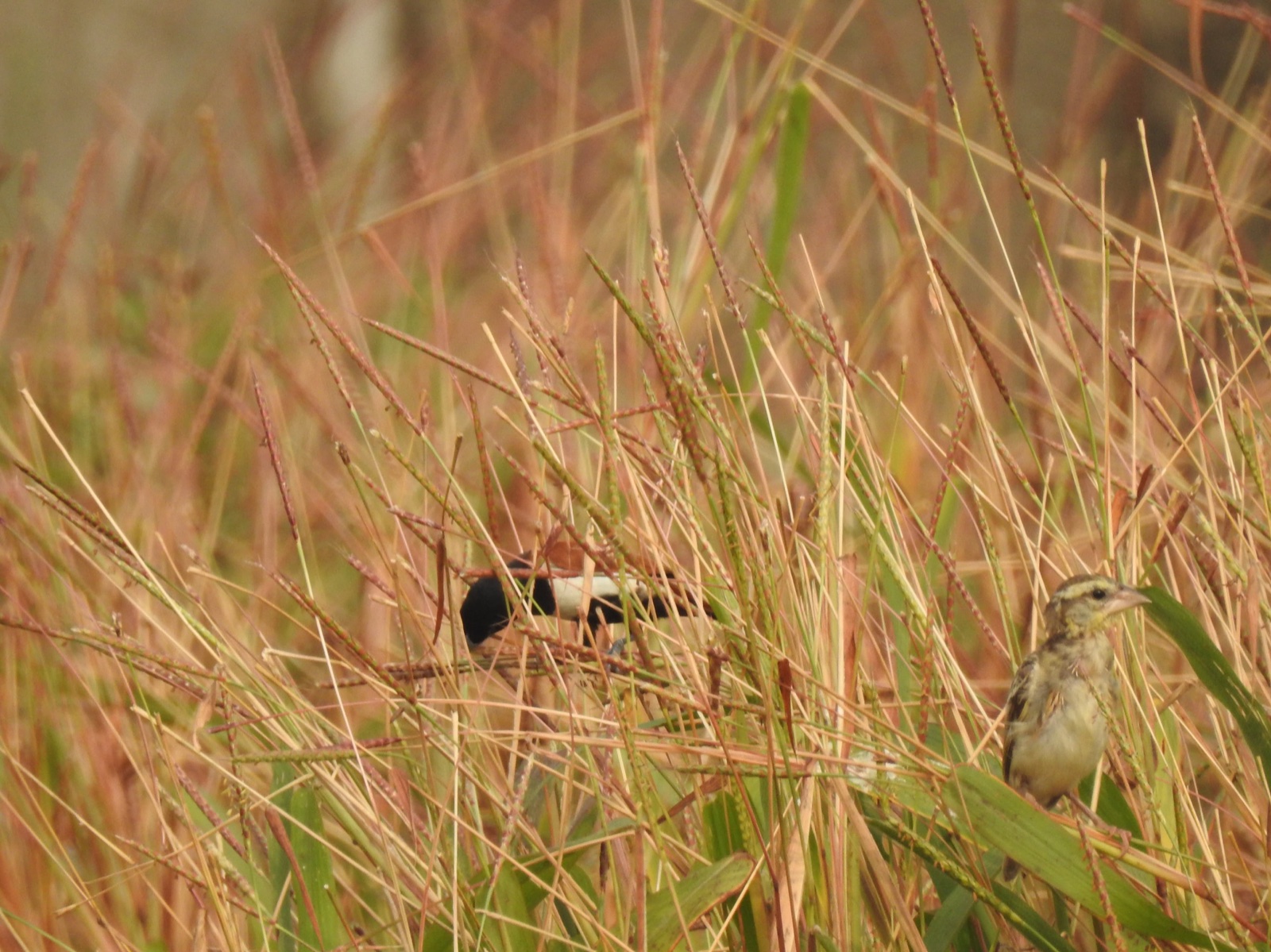
मुनिया पक्षी (Estrildidae) छोटे दानाभक्षी पक्षी हैं, जिनका जीवन घास के बीजों और घासभूमि की संरचना से गहराई से जुड़ा होता है। इस अध्ययन में अभेड़ा जैविक उद्यान, कोटा में चार प्रजातियों पर ध्यान दिया गया: इंडियन सिल्वरबिल, स्केली-ब्रेस्टेड मुनिया, रेड अवाडावट और ट्राइकलर्ड मुनिया।
अध्ययन में कुल 280 फोकल फॉरेंजिंग अवलोकन दर्ज किए गए। नौ घास प्रजातियों को भोजन संसाधन के रूप में पहचाना गया। सभी चार मुनिया प्रजातियाँ Ischaemum rugosum पर भोजन करती देखी गईं, और इसी घास ने कुल अवलोकनों में सबसे अधिक योगदान दिया।
अध्ययन क्षेत्र और विधि
अभेड़ा जैविक उद्यान दक्षिण-पूर्वी राजस्थान के कोटा जिले में स्थित है। यह अर्ध-शुष्क जलवायु वाला क्षेत्र है, जहाँ गर्म ग्रीष्म, मानसूनी वर्षा और हल्की सर्दियाँ मिलती हैं। पेपर के अनुसार QGIS आधारित स्थान मानचित्र तैयार किया गया, ताकि उद्यान की स्थिति और घासभूमि, जलक्षेत्र तथा वृक्षीय हिस्सों जैसे प्रमुख आवास-तत्वों को समझा जा सके।
फोकल-एनिमल सैंपलिंग द्वारा छोटे समयांतरालों में पक्षियों या झुंडों को देखा गया। प्रत्येक पुष्ट भोजन-घटना को एक अवलोकन माना गया। अवलोकन सुबह और शाम के समय किए गए, जब भोजन गतिविधि सबसे अधिक रहती है।
दर्ज की गई घास प्रजातियाँ
भोजन संसाधन के रूप में नौ घासें दर्ज की गईं: Apluda mutica, Echinochloa colona, Eragrostis pilosa, Eragrostis tenella, Eragrostis unioloides, Eriochloa procera, Isachne globosa, Ischaemum rugosum और Oryza rufipogon।
परिणाम और व्याख्या
Ischaemum rugosum कुल रिकॉर्ड का 25% रहा। Eragrostis pilosa और Apluda mutica भी महत्वपूर्ण घास संसाधन रहे। रेड अवाडावट अपेक्षाकृत नम या वेटलैंड-किनारे वाली घासों से अधिक जुड़ी दिखी, जबकि ट्राइकलर्ड मुनिया में Ischaemum rugosum और Eriochloa procera का उपयोग अधिक रहा।
पेपर में chi-square goodness-of-fit test ने दिखाया कि घास उपयोग यादृच्छिक नहीं था (χ² = 96.4, df = 8, p < 0.001)। इसलिए यह अध्ययन शहरी जैविक उद्यानों में देशी घासों के संरक्षण महत्व को रेखांकित करता है।
प्रबंधन और संरक्षण संकेत
घासभूमि को बहुत अधिक साफ-सुथरा या लगातार काटा हुआ रखने से दानाभक्षी पक्षियों के भोजन संसाधन कम हो सकते हैं। यह अध्ययन बताता है कि देशी घासों, बीज बनने के समय, और वेटलैंड-किनारे वाली विविध घास संरचना को बनाए रखना मुनिया जैसे छोटे पक्षियों के लिए उपयोगी हो सकता है।
निष्कर्ष का मुख्य संदेश यह है कि शहरी जैविक उद्यान छोटे दानाभक्षी पक्षियों के लिए महत्वपूर्ण शरणस्थल बन सकते हैं, यदि प्रबंधन में घास-पक्षी संबंधों, बीज उपलब्धता और आवास विषमता को शामिल किया जाए।
Grass Species Utilization by Munia Birds (Estrildidae)
Lightly web-formatted from the original paper so the research structure, data, and authorial content remain intact.
Abstract
Granivorous birds are closely associated with grassland structure and seed availability, particularly within managed urban landscapes. The present study examines the foraging ecology of four munia species: Indian Silverbill (Euodice malabarica), Scaly-breasted Munia (Lonchura punctulata), Red Avadavat (Amandava amandava), and Tricoloured Munia (Lonchura malacca) at Abhera Biological Park, Kota, Rajasthan.
A total of 280 focal foraging observations were recorded across nine grass species. All four munia species were observed feeding on Ischaemum rugosum, which accounted for the highest proportion of total foraging records. Species-specific preferences for other grasses were also evident. Statistical analysis using a chi-square goodness-of-fit test confirmed significant deviation from random grass use (χ² = 96.4, df = 8, p < 0.001). The findings emphasize the ecological importance of native grasses in sustaining granivorous bird communities in urban protected areas.
Keywords: Granivorous birds; Munia; Grassland management; Urban biodiversity; Native grasses; Abhera Biological Park Kota.
Introduction
Grassland ecosystems support a diverse assemblage of seed-eating birds, yet these habitats are increasingly modified by urban expansion and intensive management practices. Munias are small granivorous passerines that rely heavily on grass seeds throughout their life cycle. Their feeding behavior reflects both resource availability and habitat quality, making them useful indicators of grassland health.
Urban biological parks often retain fragments of semi-natural grasslands, but these areas are frequently subjected to mowing, landscaping, and plant replacement. Information on how granivorous birds utilize grass resources within such settings remains limited. This study aims to document grass species used by munias at Abhera Biological Park, quantify species-wise foraging preferences, and assess the conservation value of native grasses in an urban context.
Materials and Methods
Study area and GIS mapping: Abhera Biological Park is situated in Kota district, south-eastern Rajasthan, India, approximately 25.13° N, 75.88° E. The region experiences a semi-arid climate characterized by hot summers, monsoon rainfall, and mild winters. A GIS-based location map was prepared using QGIS 3.x, illustrating the position of the park within Rajasthan and India, along with major habitat features such as grasslands, wetlands, and woodland patches.
Study species: The study focused on four munia species commonly recorded within the park: Indian Silverbill (Euodice malabarica), Scaly-breasted Munia (Lonchura punctulata), Red Avadavat (Amandava amandava), and Tricoloured Munia (Lonchura malacca).
Grass species recorded: Nine grass species were identified as food resources during foraging observations: Apluda mutica, Echinochloa colona, Eragrostis pilosa, Eragrostis tenella, Eragrostis unioloides, Eriochloa procera, Isachne globosa, Ischaemum rugosum, and Oryza rufipogon.
Behavioral observations: Foraging behavior was documented using focal-animal sampling. Individual birds or flocks were observed for short intervals, and each confirmed feeding bout was treated as a single observation. Observations were conducted during early morning and late afternoon hours when foraging activity was highest. The grass species utilized and relative feeding intensity were recorded.
Data analysis: Foraging observations were summarized for each grass species and munia species. Percentage contributions were calculated to describe relative use. A chi-square goodness-of-fit test was applied to examine whether grass utilization differed significantly from random expectation.
Results
A total of 280 foraging observations were documented during the study period. Among the grasses recorded, Ischaemum rugosum contributed the highest proportion of feeding records (25%), followed by Eragrostis pilosa and Apluda mutica. All four munia species were observed feeding on Ischaemum rugosum, indicating its broad importance as a food resource.
Species-wise analysis revealed both overlap and differentiation in grass use. Indian Silverbill frequently utilized Apluda mutica and Eragrostis pilosa, whereas Scaly-breasted Munia showed higher use of Echinochloa colona and Eragrostis tenella. Red Avadavat was more closely associated with wetland-edge grasses such as Isachne globosa and Oryza rufipogon. Tricoloured Munia relied heavily on Ischaemum rugosum and Eriochloa procera. The chi-square test indicated significant non-random grass utilization (χ² = 96.4, df = 8, p < 0.001).
Discussion
The findings demonstrate selective foraging behavior among munia species within an urban biological park. The consistent use of Ischaemum rugosum across all species suggests that this grass plays a key role in supporting granivorous birds. High seed output and prolonged seed availability may explain its widespread selection.
Differences in secondary grass preferences indicate resource partitioning among species, which may reduce competition. The association of Red Avadavat with wetter grass species highlights the importance of maintaining habitat heterogeneity within urban parks. These results reinforce the value of native grass assemblages for sustaining avian diversity in modified landscapes.
Management and Conservation Implications
Urban grassland management practices can strongly influence food availability for granivorous birds. The results of this study suggest that conserving native grass species, particularly Ischaemum rugosum, is essential for maintaining munia populations. Management interventions such as reduced mowing frequency during seed-setting periods and preservation of wetland-edge grasses are likely to benefit urban bird communities.
Conclusion
The present study provides field-based evidence on grass species utilization by munia birds within Abhera Biological Park, Kota, Rajasthan. The consistent use of Ischaemum rugosum by all four munia species highlights its critical role as a key food resource in managed urban grasslands. Species-specific variation in the use of other grasses suggests selective foraging and partial resource partitioning, which may facilitate the coexistence of multiple granivorous bird species within a relatively small habitat.
These findings underscore the importance of native grass diversity in sustaining granivorous bird communities in urban protected areas. Grassland management practices that prioritize aesthetic landscaping or frequent mowing may inadvertently reduce seed availability and negatively affect bird populations. In contrast, conservation-oriented management that retains native grasses, allows natural seed maturation, and maintains habitat heterogeneity can significantly enhance urban avian biodiversity.
Overall, this study emphasizes that urban biological parks can function as important refuges for grassland birds when ecological requirements are incorporated into management planning. Long-term monitoring of grass-bird interactions, combined with adaptive grassland management, will be essential for conserving granivorous birds in rapidly urbanizing semi-arid landscapes.
Grass-use observations by munia species
| Grass species | Indian Silverbill | Scaly-breasted Munia | Red Avadavat | Tricoloured Munia | Total observations |
|---|---|---|---|---|---|
| Apluda mutica | 18 | 6 | 4 | 5 | 33 |
| Echinochloa colona | 7 | 15 | 3 | 4 | 29 |
| Eragrostis pilosa | 16 | 10 | 4 | 8 | 38 |
| Eragrostis tenella | 5 | 14 | 2 | 3 | 24 |
| Eragrostis unioloides | 12 | 6 | 2 | 2 | 22 |
| Eriochloa procera | 4 | 5 | 3 | 10 | 22 |
| Isachne globosa | 3 | 4 | 12 | 3 | 22 |
| Ischaemum rugosum | 20 | 18 | 15 | 17 | 70 |
| Oryza rufipogon | 5 | 2 | 10 | 3 | 20 |
| Total observations | 90 | 80 | 55 | 55 | 280 |